CARBON REDUCTION PLAN

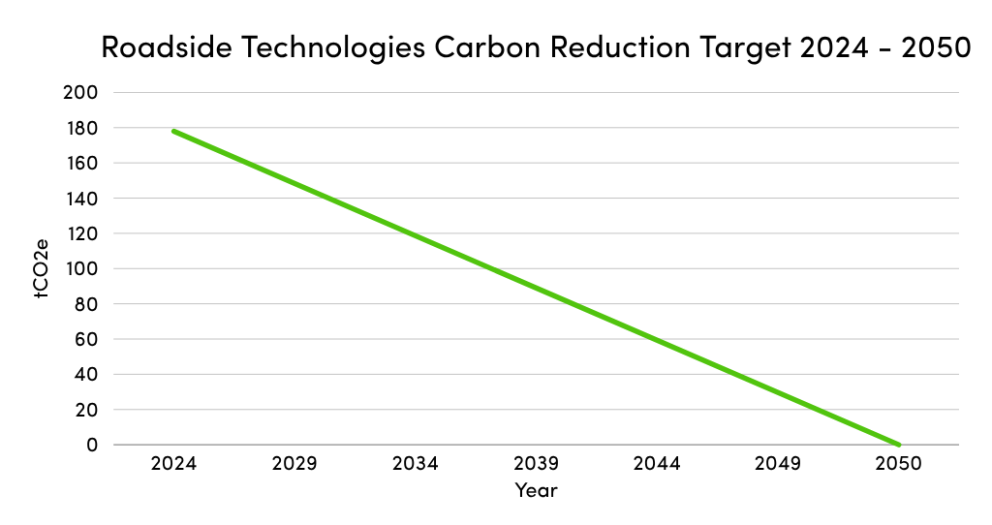
Roadside Technologies is committed to achieving net zero emissions by 2050

Commitment to achieving net zero

carbon reduction target graph showing a downward trend to zero by 2050

Baseline emissions footprint

Baseline emissions are a record of the greenhouse gases that have been produced in the past and were produced prior to the introduction of any strategies to reduce emissions.

Baseline emissions are the reference point against which emissions reduction can be measured.

Baseline year: 2024 Jan-Dec
Additional details relating to the baseline emissions calculations:
The scope 3 categories not included in the baseline figure were due to lack of data, anticipate an increase in the following years due to improved reporting practices.
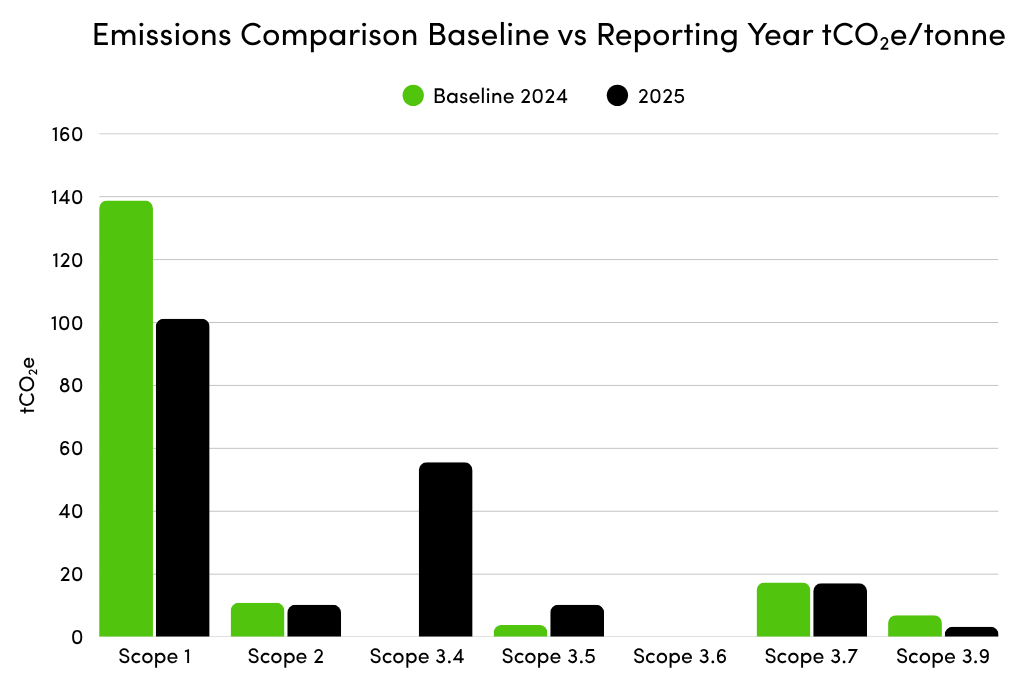
Baseline year emissions:
Emissions Total (tCO2e)
Scope 1 138.8
Scope 2 10.9
Scope 3 (included sources) 3.5, 3.7. 3.9 28.22
Total emissions 177.92
Reporting year: 2025 Jan-Dec
Emissions Total (tCO2e)
Scope 1 101.2
Scope 2 10.27
Scope 3 (included sources) 3.4, 3.5, 3.6, 3.7. 3.9 85.36
Total emissions 196.83
emissions comparison

Taking into account the improvements in reporting and increase in recorded emissions, the chart below shows the revised carbon reduction aims.
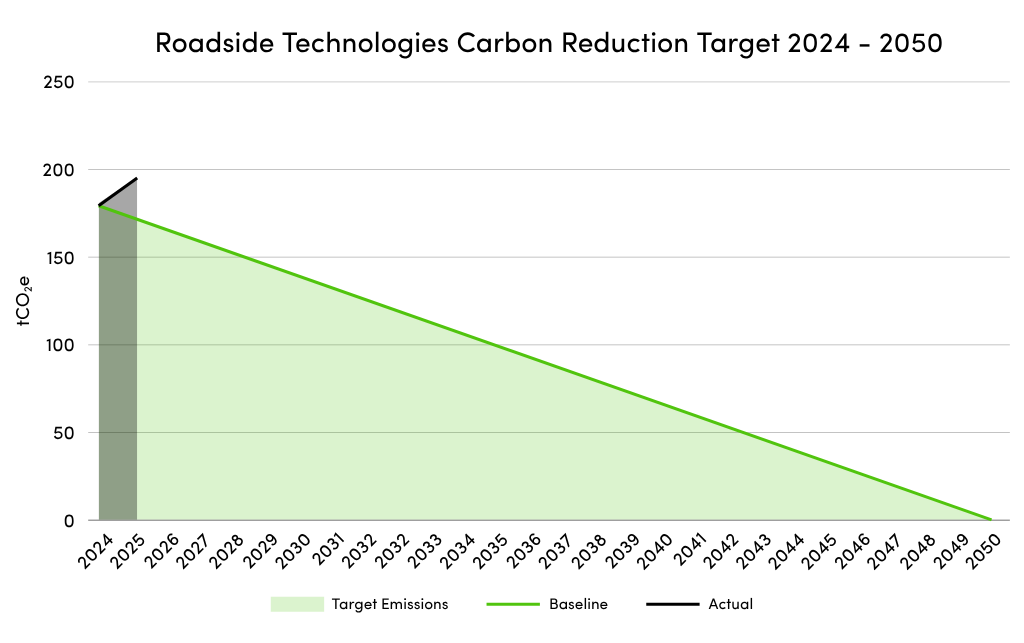
revised carbon reduction aims

Emissions reduction targets

In order to continue our progress to achieving net zero, we have adopted the following carbon reduction targets.

We project that carbon emissions will decrease over the next five years to 157.46 tCO2e by 2030. This is a reduction of 20%.
Carbon reduction projects

COMPLETED CARBON REDUCTION INITIATIVES

The following environmental management measures and projects have been completed or implemented since the 2024 baseline.

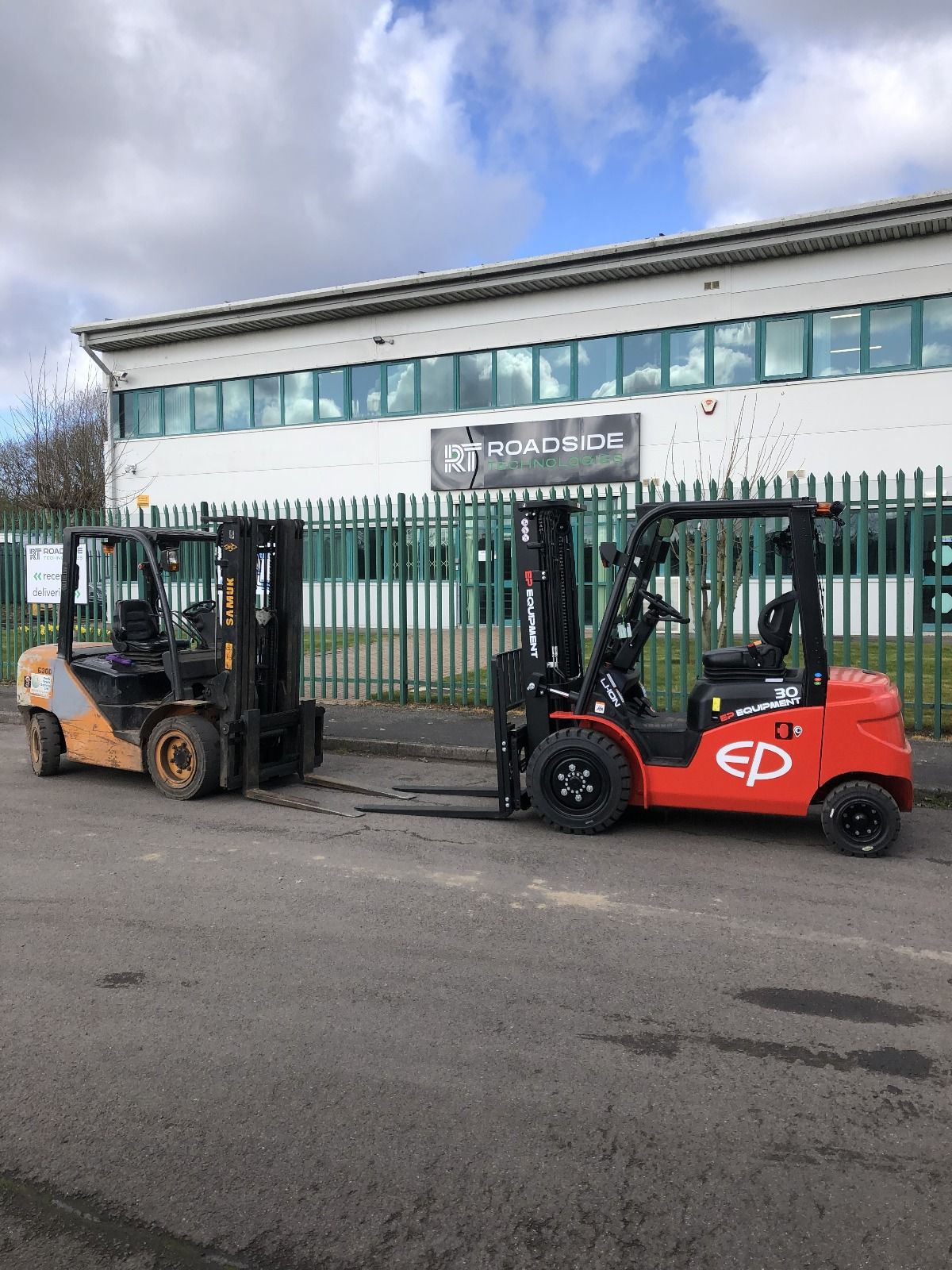
  • The opening of a third manned depot, along with improvements to route planning and a switch from diesel to electric powered fork lift truck has reduced diesel consumption by 25%, a saving of 33.42 tCO2e.
  • Petrol powered vehicles have been phased out and replaced by EV, eliminating 1.65 tCO2e.
  • Improved equipment management has resulted in fewer battery swaps and maintenance visits

The carbon emission reduction achieved by these schemes equate to 35.07 tCO2e, a 28.7% reduction against the 2024 baseline and the measures will be in effect when performing the contract.
  • The third depot opened Q4 2025, and has already had an impact on fuel use by reducing distances to site, this impact is expected to be maintained going forward. In April 2026, we took delivery of the company’s first commercial EV, which will further reduce fuel use for our operations in the area.
  • The total reported emissions have increased due to reporting of scope 3.4 which was omitted for the baseline year due to lack of data. The greatest contributor from the baseline year was diesel use, which we have reduced.
  • Scope 2 emissions are comparable, however the business is growing and power demands are rising.
  • Scope 3.5 has seen an increase due to more accurate reporting rather than an increase in waste produced, it is anticipated that this figure will not be subject to such an increase in subsequent years.
  • Scope 3.7 is comparable, with a larger workforce, this is in part due to greater adoption of EVs by staff. We are moving to a more accurate reporting method for 2026 that will give us a daily commuting emissions figure.
  • Scope 3.9 was influenced by major projects in the baseline year, it is possible that the figure will fluctuate year by year.
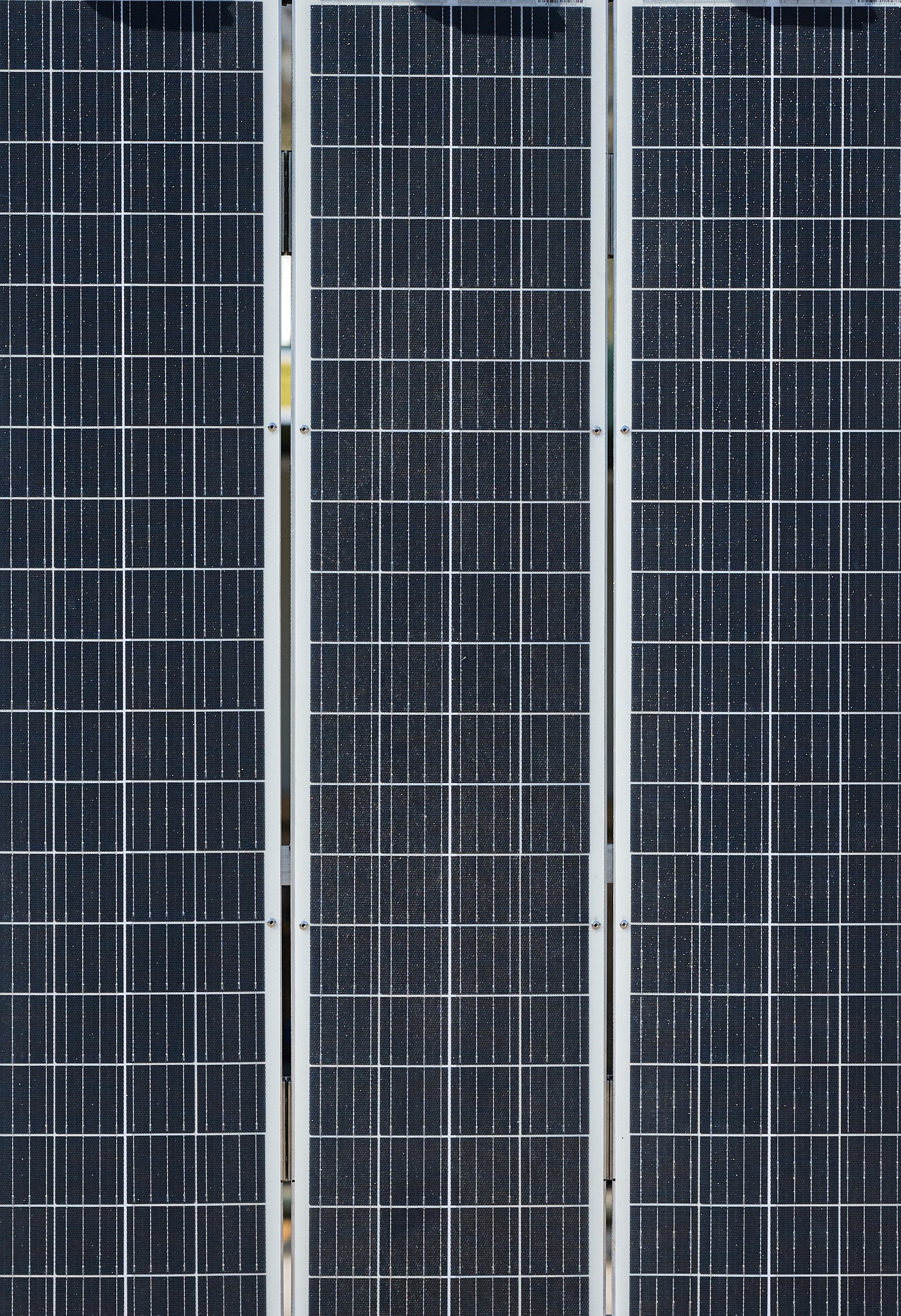
close up of solar panels

FUTURE CARBON REDUCTION INITIATIVES

In the future, we hope to implement further measures such as:

  • The company will look to replace the existing delivery and maintenance vehicle fleet with EVs as the technology advances and available vehicles become a viable alternative. Current offerings do not have suitable capacity or range.
  • When the current energy supply deal expires in 2028, we will endeavour to choose a sustainable energy supplier for gas and electricity use.
  • The viability of fitting our premises with solar panels is being explored with a view to reducing our scope 2 emissions.
  • We are making a transition to lithium-ion and sodium-ion batteries, and the latest technology in solar panels for our equipment. This is intended to reduce scope 1 emissions produced by travelling to sites for battery swaps, and reduce scope 2 emissions by reducing the amount of battery charges that need to be carried out at our premises.
  • Roadside Technologies is part of the cycle-to-work scheme and has a number of staff participants. We will continue to promote the benefits of the scheme to staff with the aim of reducing GHG emissions, improving employee health and wellbeing, and reducing our impact on the local community through lowering traffic volumes, noise and air pollution.
  • The company have transitioned to EVs for those with a company car and are committed to continuing this policy.
  • There is a desire to reduce our GHG emissions produced by commuting employees. As such, we will be assessing the viability of an electric car salary sacrifice scheme, whereby employees will be able to benefit from switching to EVs at a lower cost.
  • Our office buildings are heated by gas powered boilers. Long term, we will look at replacing fossil fuel systems with renewable alternatives such as air-source heat pumps, as appropriate for the business and taking into account our commitment to reducing emissions.
  • Where practicable, meetings will be held remotely using video conferencing, eliminating unnecessary journeys, reducing our carbon footprint and our impact on traffic volumes.

DECLARATION AND SIGN OFF

This Carbon Reduction Plan has been completed in accordance with PPN 006 and associated guidance and reporting standard for Carbon Reduction Plans.

Emissions have been reported and recorded in accordance with the published reporting standard for Carbon Reduction Plans and the GHG Reporting Protocol corporate standard and uses the appropriate government emission conversion factors for greenhouse gas company reporting.

Scope 1 and Scope 2 emissions have been reported in accordance with SECR requirements (where required), and the required subset of Scope 3 emissions have been reported in accordance with the published reporting standard for Carbon Reduction Plans and the Corporate Value Chain (Scope 3) Standard.

This Carbon Reduction Plan has been reviewed and signed off by the board of directors (or equivalent management body).

Signed on behalf of the supplier:

Date: 10/04/2026

linkedin facebook pinterest youtube rss twitter instagram facebook-blank rss-blank linkedin-blank pinterest youtube twitter instagram